940-380-1188

What To Expect When Your General Dentist Places Dental Implants?
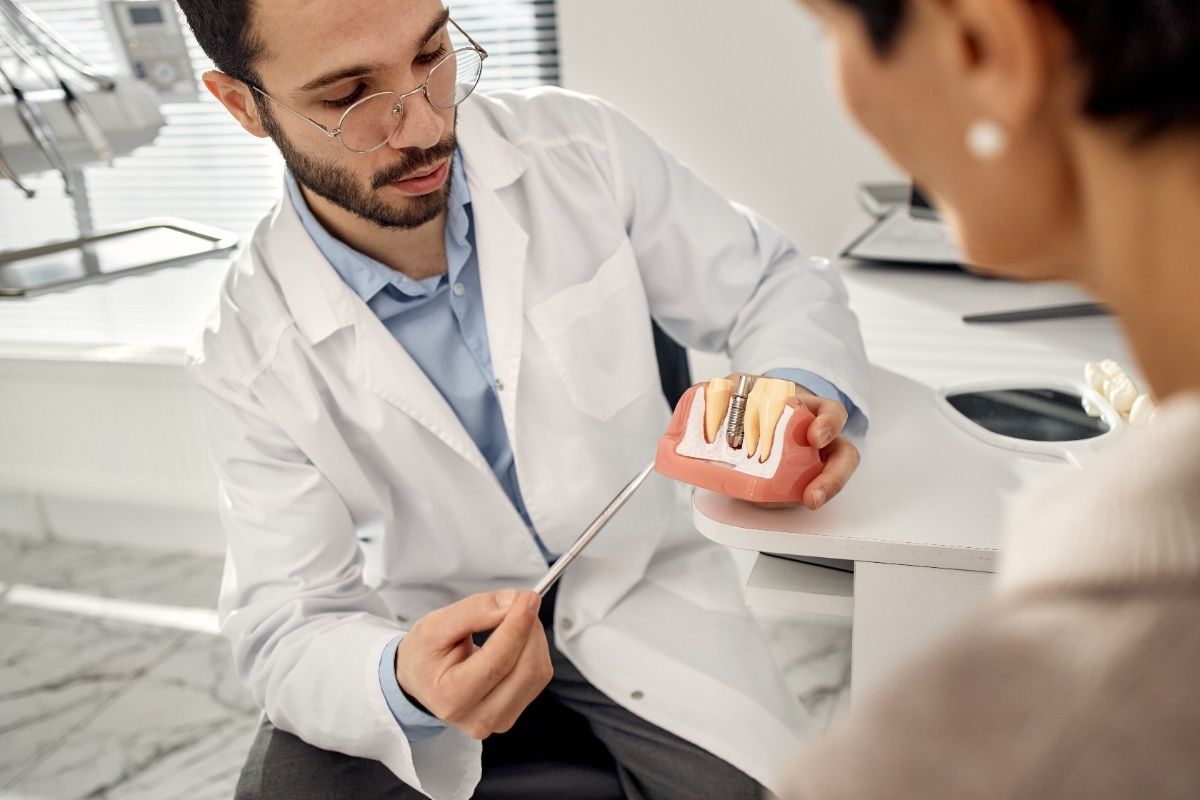
Have you lost a tooth and wondered whether your general dentist can replace it with a dental implant? You’re not alone. Millions of Americans are missing one or more teeth due to decay, gum disease, injury, or aging. According to the American College of Prosthodontists, approximately 178 million Americans are missing at least one tooth, while about 40 million Americans have lost all of their teeth. As a result, dental implants have become one of the most popular and predictable tooth replacement options available today.
Many patients are surprised to learn that qualified general dentists often place and restore dental implants in their own offices. Thanks to advances in digital imaging, guided surgery, and implant technology, general dentists with specialized implant training can provide comprehensive implant treatment without referring patients elsewhere.
If you’re considering dental implants, understanding the process can help you feel more confident and prepared.
In this guide, we’ll explain what to expect when your general dentist places dental implants, how the procedure works, recovery timelines, success rates, costs, and what local patients throughout the United States should know before starting treatment.
According to the American Academy of Implant Dentistry (AAID), more than 3 million Americans currently have dental implants, and that number grows by approximately 500,000 patients annually.
Can a General Dentist Place Dental Implants?
Yes.
Many general dentists receive advanced education and hands-on training in implant dentistry.
Modern implant systems, combined with sophisticated treatment-planning software, enable trained general dentists to place implants for many patients successfully.
General dentists commonly perform:
- Single-tooth implants
- Implant crowns
- Implant-supported bridges
- Implant maintenance
- Bone grafting procedures in some cases
More complex situations involving extensive bone loss or advanced surgical needs may still require referral to a specialist.
However, many routine implant cases can be completed entirely within a general dental practice.
Why Are Dental Implants So Popular?
Dental implants in Denton offer several advantages over traditional tooth replacement options.
According to research published in the International Journal of Oral & Maxillofacial Implants, implant survival rates frequently exceed 95% over 10 years.
Benefits include:
- Natural appearance
- Strong chewing ability
- Jawbone preservation
- Long-term durability
- Improved speech
- Better comfort than removable dentures
Unlike traditional bridges, implants do not require modifying adjacent healthy teeth.
Step 1: Your Initial Dental Implant Consultation
The process begins with a comprehensive examination.
Your dentist will evaluate:
- Oral health
- Bone volume
- Gum condition
- Medical history
- Existing restorations
- Bite alignment
Many offices utilize advanced diagnostic technology, such as:
- Digital X-rays
- Cone Beam Computed Tomography (CBCT)
- Intraoral scanners
- Digital treatment planning software
According to the American Dental Association (ADA), 3D imaging significantly improves implant planning accuracy and treatment predictability.
What Happens During the Evaluation?
Your dentist will determine:
Is There Enough Bone?
Adequate bone support is essential for implant stability.
Are the Gums Healthy?
Active periodontal disease must be treated before implant placement.
Is the Patient Healthy Enough for Surgery?
Medical conditions such as:
- Uncontrolled diabetes
- Heavy smoking
- Certain immune disorders
May affect healing and implant success.
The goal is to create the safest and most predictable treatment plan possible.
Step 2: Treatment Planning
After the examination, your dentist creates a customized treatment plan.
This plan outlines:
- Implant location
- Number of implants
- Bone grafting requirements
- Surgical timeline
- Final restoration design
- Estimated costs
Digital treatment planning allows dentists to position implants before surgery begins.
Research published in Clinical Oral Implants Research has shown that guided implant planning improves surgical precision and prosthetic outcomes.
Step 3: Tooth Extraction (If Needed)
Some patients already have a missing tooth.
Others require extraction before implant placement.
Common reasons include:
- Severe decay
- Failed root canals
- Fractured teeth
- Advanced gum disease
Modern extraction techniques focus on preserving bone whenever possible.
Preserving bone helps support future implant success.
Step 4: Bone Grafting (When Necessary)
Not every patient requires bone grafting.
However, bone loss commonly occurs after tooth extraction.
The American Academy of Periodontology reports that the jawbone can begin shrinking shortly after a tooth is lost.
Bone grafting may be recommended if:
- Bone height is insufficient
- Bone width is inadequate
- Long-term stability could be compromised
Healing periods vary but typically range from:
- 3–6 months for minor grafts
- 6–9 months for larger grafts
Step 5: Dental Implant Placement Surgery
Many patients are surprised by how comfortable implant surgery can be.
The procedure is usually performed using:
- Local anesthesia
- Oral sedation (when appropriate)
- IV sedation in some offices
During Surgery
Your dentist will:
- Numb the treatment area
- Create a small opening in the gum tissue
- Prepare the implant site
- Place the implant into the jawbone
- Close the area for healing
A single implant placement often takes less than one hour.
According to patient satisfaction studies published in the Journal of Oral Implantology, many patients report that implant surgery involves less discomfort than tooth extraction.
Does Implant Surgery Hurt?
This is one of the most common concerns.
Most patients experience:
- Mild soreness
- Minor swelling
- Temporary tenderness
Typical recovery symptoms usually improve within several days.
Over-the-counter medications often provide adequate relief.
Many patients return to normal daily activities within 24 to 48 hours.
Step 6: Healing and Osseointegration
This is one of the most important phases.
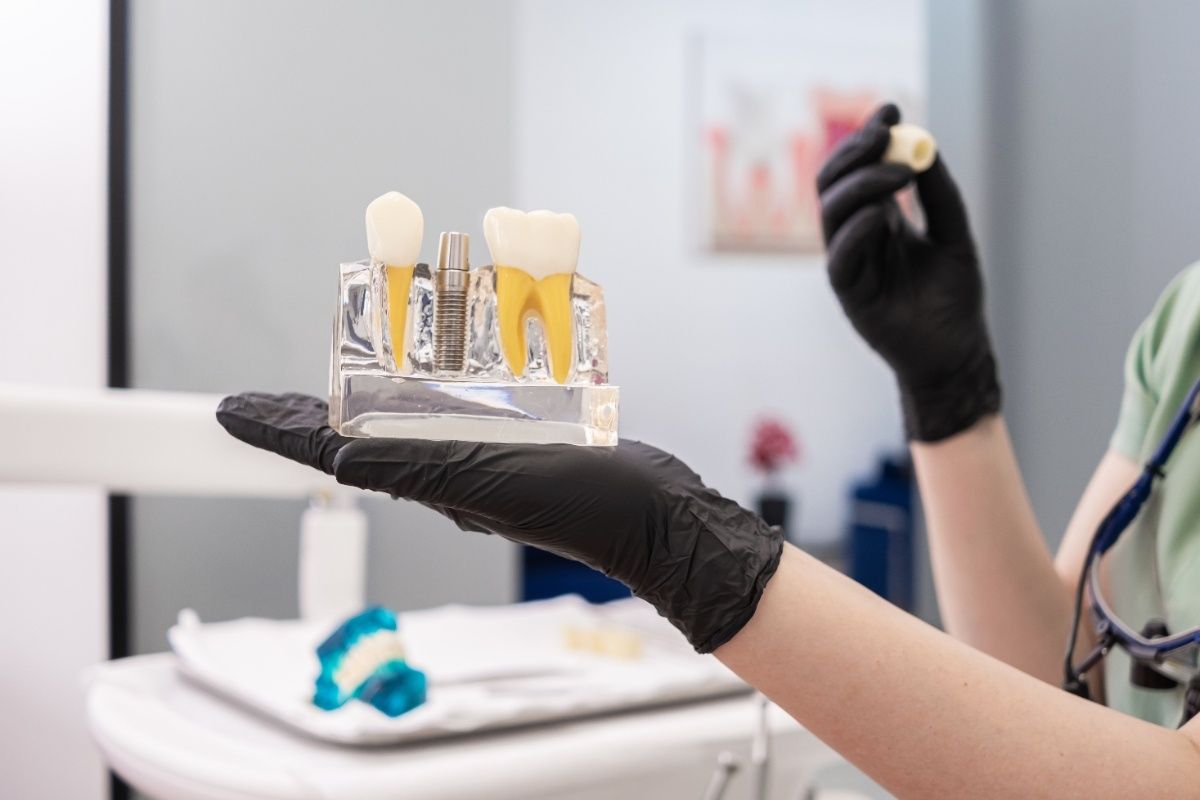
After placement, the implant undergoes a process called osseointegration.
Osseointegration occurs when:
- Bone cells grow around the implant
- The implant becomes anchored within the jaw
- Long-term stability develops
Research published in Clinical Oral Implants Research indicates that osseointegration generally requires approximately 3 to 6 months.
This biological process is responsible for the remarkable strength of dental implants.
What Should You Expect During Healing?
Most patients notice:
Week 1
- Mild swelling
- Minor soreness
- Soft food diet
Weeks 2–4
- Significant symptom improvement
- Return to normal activities
Months 3–6
- Progressive bone integration
- Implant stabilization
Regular follow-up appointments allow your dentist to monitor healing progress.
Step 7: Placement of the Abutment
Once healing is complete, the dentist attaches an abutment.
The abutment serves as the connection between:
- Implant post
- Final restoration
This minor procedure is generally quick and comfortable.
After placement, the surrounding gums heal around the abutment.
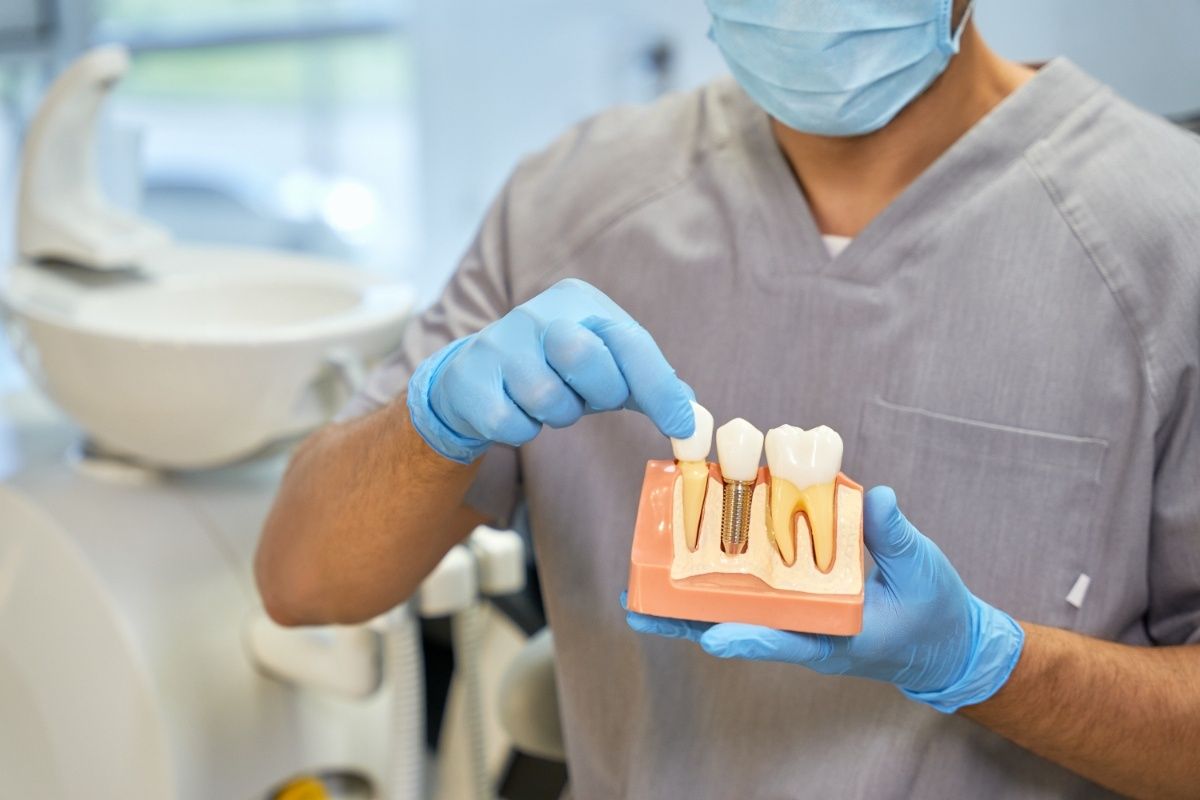
Step 8: Creating Your Custom Crown
After the implant fully integrates, your dentist designs the permanent restoration.
Modern crowns are often fabricated using:
- Digital impressions
- CAD/CAM technology
- High-strength ceramic materials
The final crown is custom-made to match:
- Shape
- Size
- Color
- Bite alignment
The result is a restoration designed to blend naturally with surrounding teeth.
How Successful Are Dental Implants?
Dental implants have one of the highest success rates in dentistry.
According to a systematic review published in the International Journal of Oral & Maxillofacial Implants:
| Time Period | Average Survival Rate |
| 5 Years | 95–98% |
| 10 Years | 94–96% |
| 15+ Years | Often above 90% |
The AAID reports overall success rates exceeding 95% in healthy patients.
These numbers make implants one of the most predictable long-term dental treatments available.
How Long Do Dental Implants Last?
With proper care, many implants last for decades.
Studies suggest that implant restorations can remain functional for:
- 20 years
- 25 years
- Even a lifetime in some cases
Longevity depends on:
- Oral hygiene
- Smoking habits
- Medical conditions
- Regular dental visits
Caring for Your Dental Implant
Maintaining an implant is similar to caring for a natural tooth.
Recommended habits include:
- Brushing twice daily
- Flossing daily
- Professional cleanings
- Routine examinations
- Avoiding tobacco products
Research consistently shows that smoking significantly increases implant failure risk.
Benefits of Having Your General Dentist Manage the Process
Many patients appreciate receiving implant care from a familiar provider.
Advantages often include:
- Continuity of Care: One dental team manages treatment from start to finish.
- Convenience: Fewer referrals and appointments.
- Personalized Treatment: Your general dentist already understands your dental history.
- Long-Term Maintenance: Routine examinations and implant monitoring occur in the same office.
For many local patients, this streamlined approach creates a more comfortable treatment experience.
Conclusion
If your general dentist offers implant dentistry, you can expect a carefully planned process designed to restore both function and appearance. From the initial consultation and digital imaging to implant placement, healing, and final crown delivery, each step plays a critical role in achieving a stable, natural-looking result.
Dental implants remain one of the most successful tooth replacement options, with long-term success rates exceeding 95% in many patients. They preserve jawbone health, restore chewing ability, and provide a durable solution that can last for decades.
If you’re missing a tooth or facing an extraction, scheduling a consultation with your local Denton dentist can help determine whether dental implants are the right solution for your smile and long-term oral health.
Frequently Asked Questions
1. Can a general dentist safely place dental implants?
Yes. Many general dentists complete advanced implant training and successfully place dental implants for routine and moderately complex cases.
2. How painful is dental implant surgery?
Most patients report mild discomfort and often describe implant surgery as easier than a tooth extraction.
3. How long does the entire implant process take?
Depending on healing requirements and bone grafting needs, treatment may take anywhere from 3 to 9 months.
4. What is the success rate of dental implants?
Studies consistently show success rates of approximately 95% or higher in healthy patients who maintain good oral hygiene.
5. How long will my dental implant last?
With proper care, many dental implants remain functional for 20 years or longer, and some can last a lifetime.