940-380-1188

Best Way To Clean Dentures Without Damaging Them
Your dentures are custom-fitted to your mouth, but they are also a reservoir for bacteria. When they aren’t cleaned correctly, they can become a breeding ground for biofilm, which can lead to denture stomatitis—an inflammatory condition affecting between 15% to 70% of denture wearers.
Beyond gum health, the material of your dentures is sensitive. Research consistently warns against the use of harsh household chemicals or abrasive brushes. Using the wrong tools can create microscopic scratches on the surface, which act as perfect nooks for bacteria to hide, making your dentures harder to clean over time and more prone to staining.
The “Golden Rules” of Denture Care
If you want your dentures to last their typical lifespan of 5–7 years, follow these dentist-recommended steps.
Rinse After Every Meal — Keep Debris at Bay
The very first step in a denture hygiene routine is simple: rinse your dentures after eating.
Why?
- Food particles can become trapped in the tiny grooves and spaces of your dentures.
- Leftover debris promotes bacterial growth and plaque biofilm buildup.
- Rinsing helps stop stains before they take hold.
A quick rinse under running water dislodges food particles, reducing odour and visible buildup — without any chemicals or brushes.
Pro Tip: Do this over a soft towel or filled sink — dentures can break if dropped.
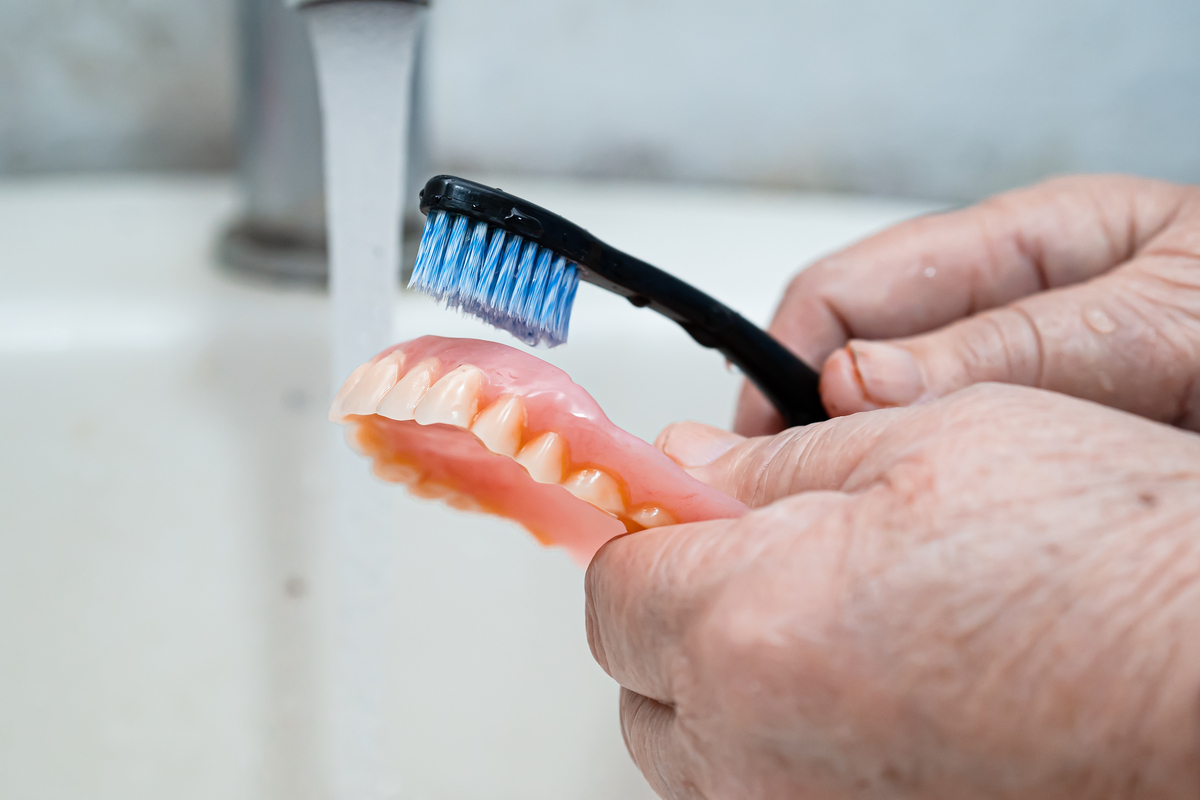
Brush Every Day With a Soft Brush
Next — daily brushing. Yes, just like natural teeth!
But here’s the catch:
Use a soft-bristled brush or a denture-specific brush — not a hard toothbrush or regular toothpaste.
Why?
- Dentures are made from acrylics and plastics that are softer than natural tooth enamel.
- Abrasive toothpaste and stiff bristles can scratch the surface, creating tiny grooves where bacteria can hide and thrive.
So what’s the right gear?
- A denture brush (designated for false teeth)
- Mild cleansers such as dish soap, mild hand soap, or denture-safe cleaners are recommended by your local certified dentist in Denton.
A study found that many people don’t use the most effective methods — and this can contribute to microbial buildup (e.g., Candida species) on dentures.
How to brush properly:
- Wet your dentures
- Apply denture cleaner
- Gently brush all surfaces
- Rinse thoroughly before wearing again
Soak Your Dentures — Nighttime Is Ideal
Once your dentures are brushed, it’s soaking time!
Experts recommend soaking dentures every night in a denture-cleaning solution or plain water.
Why?
- Soaking disinfects and loosens stubborn particles that brushing can’t reach.
- Moisture prevents your dentures from drying out and warping.
- Overnight soaking gives cleaners time to work without daytime pressure.
What to soak them in
- ADA-accepted denture cleansers (tablets or liquid solutions)
- Warm water alone if the cleanser directions suggest short soaks
- Hot or boiling water can warp them permanently.
Don’t forget: Always rinse before placing them back in your mouth, especially if you used a chemical soak.
Avoid Harmful Cleaners That Damage Dentures
This is crucial — and where many people go wrong.
- Never use toothpaste designed for natural teeth — it’s too abrasive.
- Avoid bleach or bleaching products — they can weaken the acrylic and change colour.
- Skip hot water — it can warp dentures beyond repair.
This isn’t just dentist advice — it’s science backed by oral health professionals and organisations.
Your dentures aren’t indestructible — they’re carefully crafted appliances that deserve gentle, appropriate care.
Strategic Use of Chemical Cleaners
Denture-specific chemical cleaners aren’t just nice to have — they’re proven to help reduce microbial buildup.
Many dentures have been shown to harbour Candida (yeast), especially when not cleaned effectively.
Using effervescent denture tablets or peroxide-based cleansers can:
- Kill bacteria and yeast
- Remove stubborn stains
- Freshen dentures
- Reduce biofilm buildup
Pro Tip: If you’re cleaning dentures daily, a short soak once or twice daily is usually enough. Deep chemical cleans once or twice a week can help with stains or heavy buildup.
Don’t Forget Your Gums — Healthy Mouth, Happy Dentures
Just because dentures replace teeth doesn’t mean your mouth doesn’t need care too!
???? Brush your gums, tongue, and palate with a soft brush every day, even when wearing dentures.
Why?
- Bacteria still live on your gums and oral tissues.
- Removing plaque and tongue coating reduces bad breath and infection risk.
Take Them Out at Night — Give Your Mouth a Break
Dentures need rest just like your gums do.
Sleeping with dentures in can:
- Increase risk of irritation or infection
- Promote denture stomatitis
- Increase bacterial buildup
Experts recommend removing dentures at night to reduce these risks and support oral health.
The Impact of Good Denture Care
Let’s look at the big picture of why all this matters:
Bacteria and Fungal Growth
Up to 65.8% of dentures can harbor Candidaspecies on their surfaces.
Poor Cleaning and Health Risk
When dentures are cleaned irregularly or improperly:
- Microbial biofilms thrive
- Oral infections like denture stomatitis become more likely
- Discomfort and soreness increase
- Dentures can fit poorly over time
These outcomes are preventable with the right daily care routine.
Quick Checklist: Best Practices
- Rinse dentures after every meal
- Brush with a soft brush daily
- Soak overnight in a safe solution
- Avoid abrasive products and hot water
- Clean oral tissues every day
- Consult your dentist regularly
- Take dentures out at night
Conclusion
Caring for your dentures doesn’t have to be a chore, but it does require consistency. By avoiding abrasive toothpastes, staying away from boiling water, and keeping to a daily routine of soaking and brushing, you’re protecting your oral health and your investment. Remember, your dentures are a partner in your daily life—treat them well, and they’ll return the favour with comfort and confidence.
Frequently Asked Questions
1. How often should I clean my dentures?
You should rinse after meals and brush your dentures at least once a day, ideally twice. Soak them overnight for the best results.
2. Can I use regular toothpaste to clean my dentures?
No — regular toothpaste is abrasive and can scratch the denture surface. Use denture-safe cleansers or mild soap.
3. Is it okay to sleep with my dentures in?
Experts recommend removing dentures at night to reduce infection risk and allow your gums to rest.
4. What if my dentures smell bad even after cleaning?
Smell can indicate bacterial buildup. Try soaking with a tablet cleaner and gently brushing all surfaces. Also, clean your denture case and mouth tissues.
5. Can I clean my dentures with vinegar or baking soda?
Yes — those natural agents can help with stains and bacteria in moderation, but avoid overly acidic or abrasive solutions that can damage denture material.