940-298-8467
Single, Multiple, or Full Mouth Implants: Which Option Fits Your Needs?
Have you ever looked in the mirror and wished your smile felt more complete, more permanent, and more you? You’re not alone. Tooth loss is a widespread issue, affecting an estimated over 150 million Americans who are missing at least one tooth, creating a vast need for restorative dental care.
Fortunately, modern dental implant technology offers incredibly reliable and long-lasting solutions. With the U.S. dental implant and final abutment market valued at nearly $2.1 billion in 2024 and projected to grow, more people are opting for this advanced option. However, with different choices—single, multiple, or full-mouth implants—how do you determine the best fit for your unique situation?
Let’s break down the statistics, costs, and considerations for each type of dental implant to help you chew, speak, and smile with confidence again.
The three implant options (short primer)
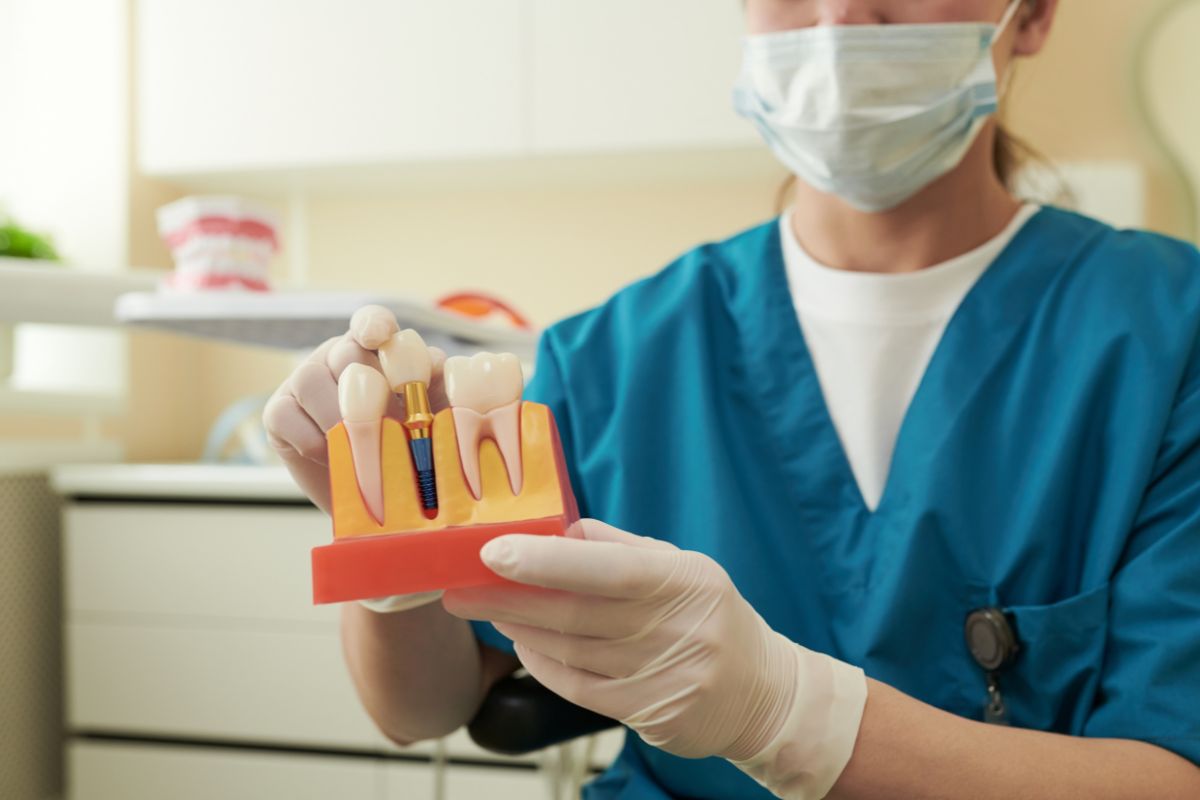
Single-tooth implant — replaces one missing tooth using an implant (a titanium screw) topped with a crown. It preserves neighboring teeth because it doesn’t require grinding adjacent teeth like a traditional bridge.
Multiple-tooth implants / implant-supported bridge — when several adjacent teeth are missing, two or more implants can support a bridge that replaces that span without altering healthy teeth. Good when you’re missing a segment but not an entire arch.
Full-mouth solutions (full-arch implants, such as All-on-4 or All-on-6, and implant overdentures) — for patients missing most or all teeth in an arch, these approaches anchor a complete prosthesis on a small number of implants (commonly four or more), providing fixed-teeth function and appearance. All-on-4 is a widely used protocol.
Who needs which option?
- Single tooth missing (1 tooth): A single implant is typically the best option — it conserves bone, offers the longest-term predictable outcome, and avoids modifying neighboring teeth.
- A few neighboring teeth are missing (2–4 teeth): An implant-supported bridge is usually the ideal balance of cost and function compared to placing individual implants for each crown.
- When most or all teeth are missing in an arch, full-arch implant solutions (such as All-on-4/6 or implant-overdentures) offer the best stability and chewing efficiency compared to removable dentures. Candidates must be evaluated for bone volume, general health, and expectations.
Context statistic: in the U.S., complete tooth loss is much less common than in prior generations — about 11% of adults aged 65–74 had lost all their teeth (data through 2017–Mar 2020), and around 20% of those 75+ were edentulous — meaning full-arch solutions are important for a significant older population.
Longevity & success: what does the evidence say?
Dental implants in Denton are one of dentistry’s most successful long-term treatments. A systematic review/meta-analysis of long-term studies found an estimated 10-year implant survival of ~96.4% (implant level), with prediction intervals that indicate very high success across studies. Outcomes vary with age, systemic health, bone quality, and maintenance.
All-on-4 and similar full-arch immediate protocols show high short-to-midterm survival in reviews (many reporting survival rates near or above 95–99% at 2–5 years), but long-term evidence is less abundant than for single implants and depends on careful planning and follow-up.
Technical failures (screw loosening, fractures) and complications (peri-implantitis) occur but are relatively uncommon when patients maintain oral hygiene and attend regular maintenance. A large clinical series reported variable mechanical failure rates depending on prosthesis and location, underscoring the need for continued professional care.
Recovery & timeline (what to expect)
- Single implant: typically a surgery appointment to place the implant, healing for 3–6 months (to allow osseointegration), then placement of an abutment and crown. If immediate (same-day) temporary crowns are used, that shortens the time to aesthetics but still requires healing for long-term stability.
- Multiple / full-arch: may require extractions, grafting, or sinus lifts — each adds weeks to months of healing. Some full-arch protocols utilize immediate loading to provide fixed teeth more quickly, but patient selection is crucial.
Risks are small but include infection, nerve injury, sinus issues, and implant failure — your surgeon will review these and mitigation strategies.
How to choose (practical decision steps)
- Inventory missing teeth — single, segmental, or entire arch? (You already did this at the top!)
- Health & habits check — smoking, uncontrolled diabetes, or heavy parafunction (bruxism) changes risk and requires planning.
- Bone assessment — CBCT imaging will show whether you need grafting or if implants can be placed immediately/angulated.
- Budget & insurance — get itemized quotes (implant, abutment, crown/prosthesis, grafts, imaging, follow-ups). Ask about warranties and maintenance plans.
- Lifestyle & expectations — do you want fixed teeth (more like natural teeth) or are you comfortable with removable overdentures? Full-arch implants provide fixed solutions, albeit at a higher cost and greater complexity.
The Bottom Line
Dental implants are a durable and predictable solution, whether you need one tooth, several teeth, or a full-arch restoration. Single implants offer excellent long-term survival (~95–96%+ at 10 years) and protect adjacent teeth. Implant-supported bridges are an efficient option for replacing multiple adjacent missing teeth. Full-arch protocols, such as All-on-4, can restore function and aesthetics for edentulous arches but require careful planning and incur higher costs. Evaluate your oral/systemic health, bone availability, budget, and lifestyle; get a detailed, itemized treatment plan from a qualified dentist in Denton or oral surgeon and compare long-term outcomes, not just upfront price.
FAQs
1. Are implants painful?
Most patients report discomfort similar to a tooth extraction. Pain is usually managed with prescribed or OTC pain relief and subsides in a few days to weeks, depending on complexity. Risks, such as infection or nerve symptoms, are uncommon.
2. How long do implants last?
With good oral hygiene and regular maintenance, dental implants typically last for decades. Extensive reviews indicate implant-level survival rates of ~96% at 10 years, although individual results vary.
3. Can anyone get implants?
Many can, but factors like poor bone volume, active gum disease, uncontrolled systemic disease, smoking, or certain medications require special consideration and sometimes additional procedures (grafting) or alternative solutions.
4. Are full-mouth implants worth it compared with dentures?
For many people, full-arch implants restore chewing function, speech, and confidence more effectively than removable dentures—but they are more expensive and may require grafting/surgery, as well as ongoing maintenance. Discuss quality-of-life goals with your dentist.
5. Will insurance pay for implants?
Coverage varies widely—many dental plans limit or exclude implants. Always request preauthorization and an itemized estimate. Consider dental savings plans, HSAs, or financing options if coverage is limited.